The Profit in Prediction: How AI and Digital Twins are Salvaging Construction Margins
The British construction sector loses an estimated £15bn annually to structural inefficiencies, flawed estimates, and chronic delays. For decades, productivity in the built environment has significantly lagged behind the wider national economy, trapped by fragmented supply chains and reactive management. Major contractors are finally abandoning legacy workflows to confront this deficit. By integrating artificial intelligence and digital twin technologies directly onto live sites, firms are actively clawing back eroded profit margins.
Dismantling the Paper Trail
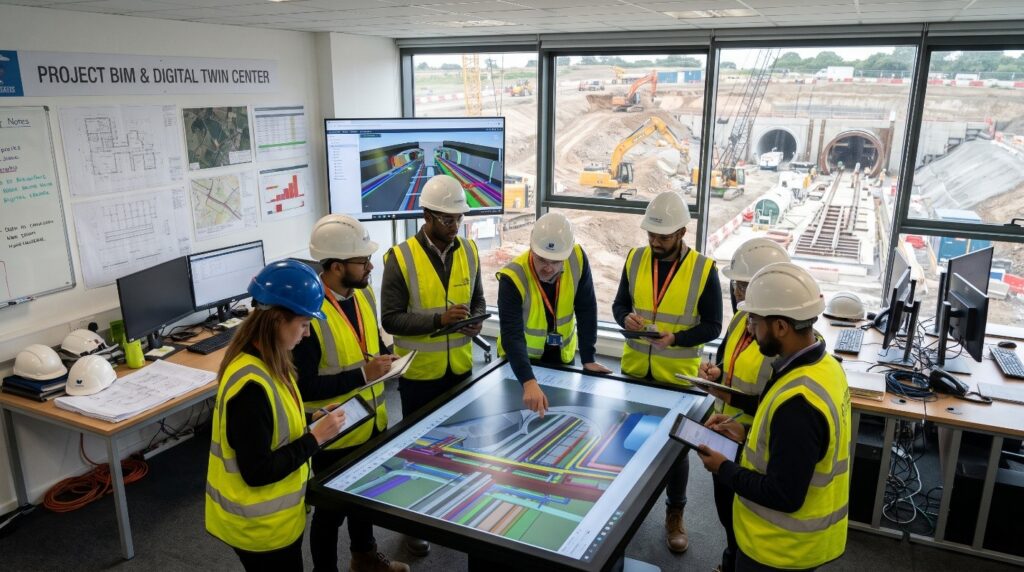
Historically, site managers relied on static blueprints and disconnected spreadsheets to track multi-million-pound material deliveries. This analogue approach meant design conflicts or schedule clashes often went unnoticed until tradespeople were already waiting on site. Digital site models now replace these outdated methods, providing continuous, real-time data feeds straight from equipment and personnel.
These digital twins are not simply 3D architectural renderings; they function as live operational mirrors of the physical site. Project managers use them to track resource allocation instantly, ensuring that heavy plant machinery and specialist subcontractors are deployed exactly when needed. This immediate visibility eliminates the expensive idle time that routinely destroys contractor profitability.
Predictive Procurement
The true commercial value of AI lies in its ability to forecast operational hazards before they manifest. Rather than reacting to supply chain failures, advanced predictive analytics cross-reference project plans with current market conditions and weather data. The software can identify impending material shortages or logistical bottlenecks up to four weeks in advance.
Armed with this foresight, procurement teams can adjust their purchasing strategies, secure alternative suppliers, or re-sequence site packages without halting the overall build. Furthermore, when clients request inevitable design alterations, AI models instantly calculate the exact financial and temporal impact. This eliminates the opaque, lengthy approval processes that typically stall progress and trigger surprise cost escalations.
The Financial Baseline
The financial return on these digital workflows is now demonstrably clear. Recent industry surveys reveal that companies utilising digital twins achieve average cost savings of roughly 19 per cent. Separate analysis from McKinsey confirms that AI-supported scheduling tools routinely accelerate project timelines by up to 20 per cent without requiring additional labour.
These margins are transformative for a sector that typically operates on extremely tight commercial boundaries. By minimising physical rework and preventing equipment downtime, contractors achieve immediate, measurable reductions in capital expenditure. The technology also drives significant environmental gains, with optimised material usage cutting carbon emissions by an average of 15 per cent.
Deploying artificial intelligence on a building site is no longer a speculative exercise. For tier-one developers and mid-market civil firms alike, digital integration now represents the standard requirement for competitive bidding. Contractors who refuse to upgrade their operational technology will find their bids consistently undercut by rivals who possess total visibility over their supply chains. In a market constrained by thin margins and structural labour deficits, digital foresight is the only reliable defence against commercial failure.