The 10% Rule: How Biodiversity Net Gain Transformed Landscape Architects into Commercial Dealmakers
When a regional developer attempts to break ground on a fully funded, permitted commercial site, a single missing document can now halt operations entirely. Since 2024, the English planning system has enforced an uncompromising condition: every new development must leave the natural environment in a measurably better state. Specifically, developers must prove they will deliver a 10 per cent net gain in biodiversity. This strict statutory requirement has fundamentally rewritten the commercial real estate playbook. It has also elevated landscape architects from late-stage aesthetic consultants to critical commercial dealmakers.
The Commercial Reality of the 10% Threshold
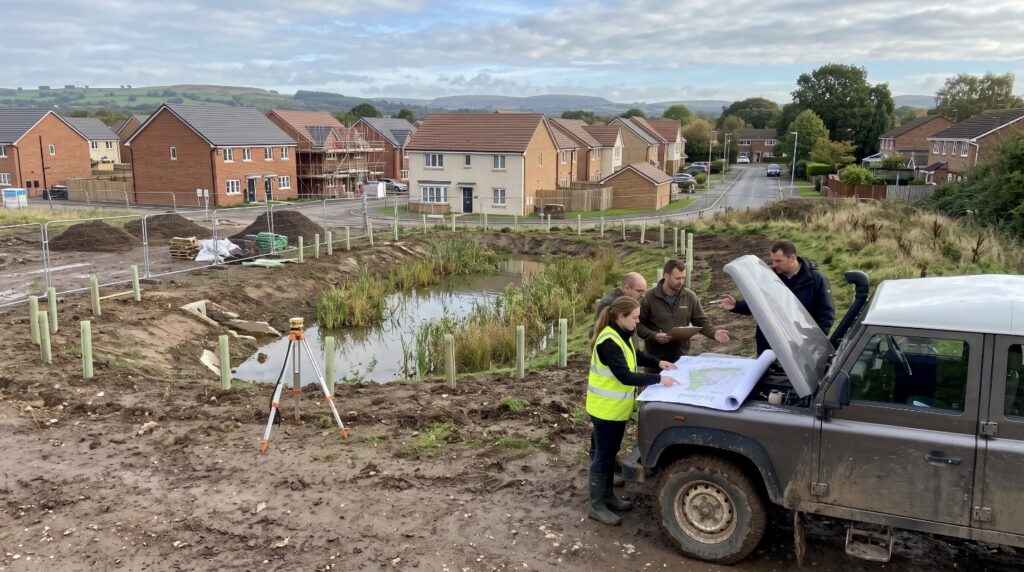
The regulatory mechanism driving this shift is unforgiving. Developers must submit a formal biodiversity gain plan and secure explicit approval from the local planning authority before any physical work begins. The legislation establishes a strict hierarchy for achieving this 10 per cent uplift, prioritising on-site habitat creation above all else. Planners expect developers to exhaust on-site enhancements first, before seeking off-site solutions or purchasing heavily penalised statutory government credits as a genuine last resort. Crucially, any land committed to biodiversity net gain (BNG) enters a legally binding maintenance agreement lasting at least 30 years.
From Shrubbery to Strategy
This 30-year liability forces property investors to rethink site viability from the point of land acquisition. Developers who treat BNG as a secondary compliance issue routinely face budget shocks, reduced site density, and severe programme delays. Consequently, corporate boards are bringing landscape architects into the initial land valuation and due diligence processes. These professionals now calculate whether an urban plot can physically support the required natural capital. By designing highly efficient interventions like living walls, rain gardens, and green roofs, they generate necessary biodiversity units within tight commercial boundaries. Their ability to maximise on-site ecological value directly protects the developer’s profit margin.
Brokering the New Habitat Market
When an urban site physically cannot accommodate a 10 per cent gain, the legislation forces developers into a newly minted secondary market. BNG regulation effectively commodifies nature, creating a tradable unit of biodiversity that relies on rigorous measurement, verification, and demand. Landscape architects frequently act as technical brokers in this space. They evaluate registered off-site habitat banks to ensure they precisely match the statutory deficit of a given project. Capital is rapidly flowing into rural restoration projects simply to service the regulatory demands of urban construction, establishing biodiversity as a credible alternative investment class.
The days of treating ecological compliance as an optional site-greening exercise are permanently over. The mandatory 10 per cent uplift physically ties financial viability to natural restoration. Property developers must now view natural infrastructure as a core project constraint, carrying the exact same weight as structural engineering or grid connectivity. Those who integrate ecological expertise at the acquisition stage will secure their planning permissions and preserve their margins. Those who delay will simply find their capital locked behind an impenetrable green wall.